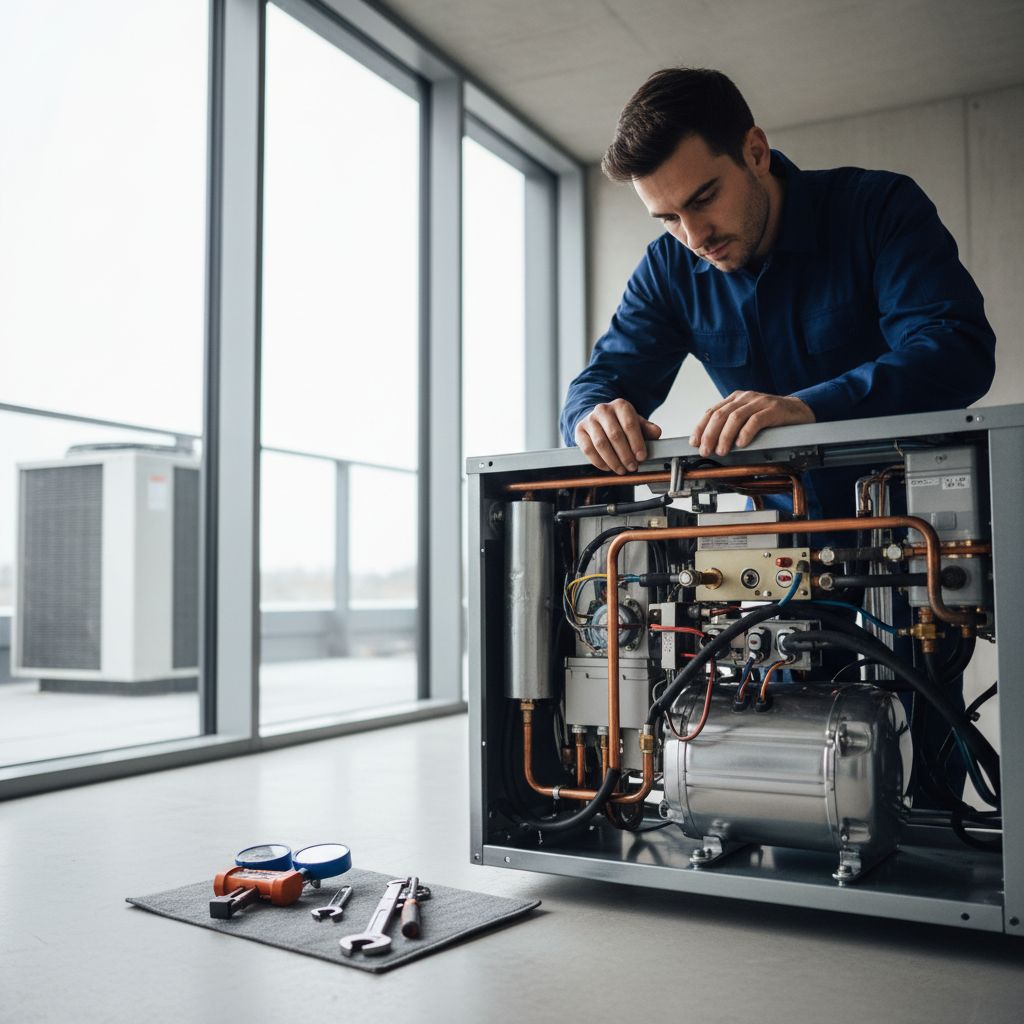
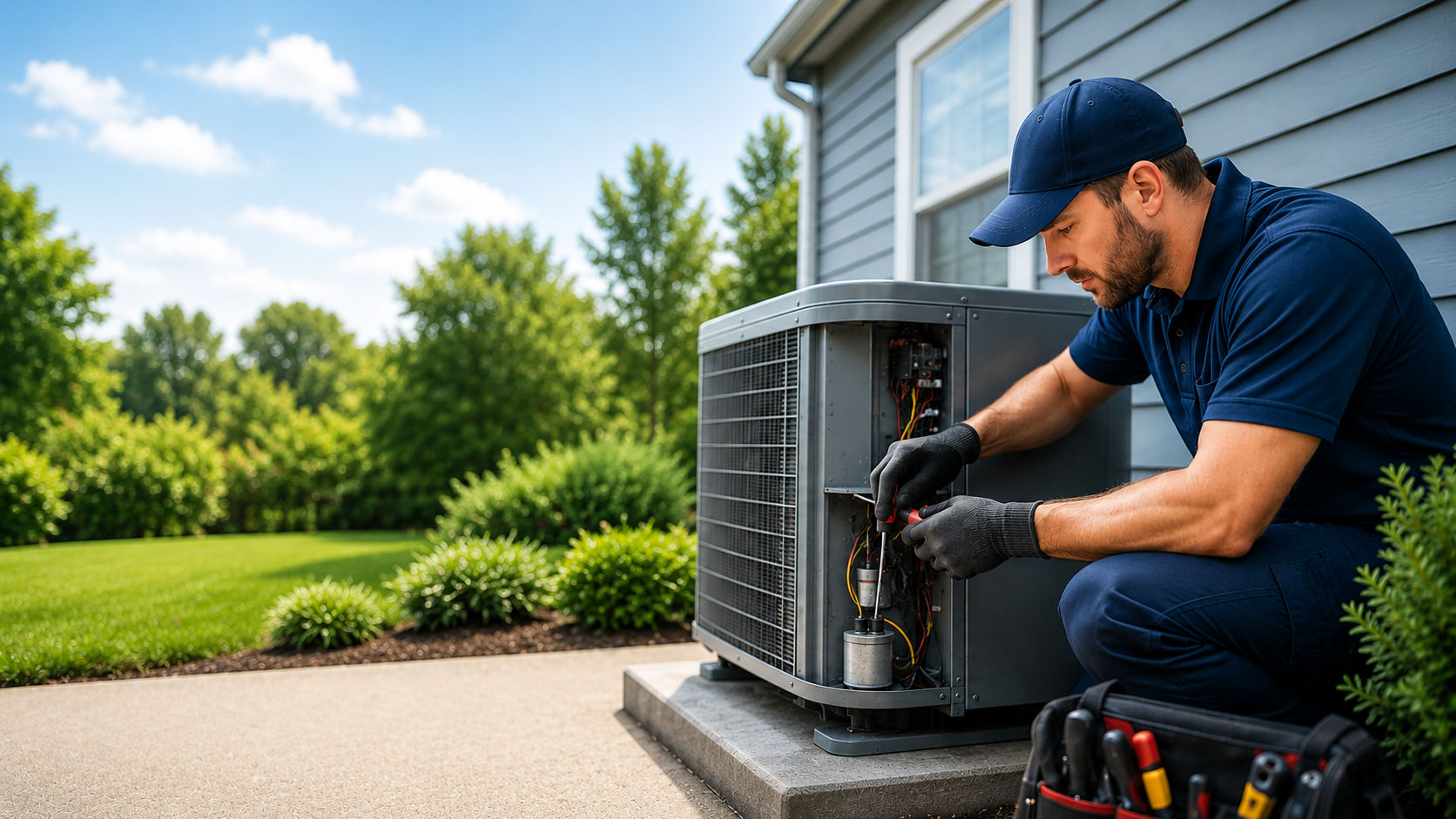
A heat pump is the default sensible choice in Jacksonville because the climate plays to its strengths. Heat pumps lose efficiency as outdoor temperatures drop toward freezing, which is the standard objection in northern states. Jacksonville spends very few hours near that threshold, so the objection largely does not apply here.
When a Heat Pump Is the Right Choice for a Jacksonville Home
Four situations where a heat pump clearly beats the alternatives, and the honest limits are in the section below.
You are replacing an AC and a furnace at the same time
One heat pump does both jobs. You buy and maintain one piece of outdoor equipment instead of two systems with separate service lives.
Your home is all-electric with no gas supply
Very common across Jacksonville. The alternative is electric strip heat as the primary heat source, which costs several times more per unit of warmth.
You want dehumidification control, not just cooling
Variable speed heat pumps run longer at lower capacity, which removes considerably more moisture. In a climate where July humidity averages in the mid-70 percent range, that is the comfort difference people actually feel.
You are adding conditioned space
A ductless heat pump handles a garage conversion, Florida room or addition without extending ductwork that was never sized for the extra load.
What Does Heat Pump Installation Cost in Jacksonville?
Published market ranges for supply and fit. Ductwork condition and electrical capacity are the two things most likely to move your number away from these.
| System | Typical installed range | Best for | Main tradeoff |
|---|---|---|---|
| Single stage ducted, 14.3 - 15 SEER2 | $6,500 - $10,000 | Straight like-for-like swap | Least humidity control |
| Two stage ducted, 16 - 17 SEER2 | $9,000 - $14,000 | Most Jacksonville homes | Best balance of cost and comfort |
| Variable speed ducted, 18+ SEER2 | $12,000 - $19,000 | Humidity-sensitive homes | Higher out-of-warranty repair cost |
| Ductless single zone | $3,500 - $6,000 | Garage, addition, Florida room | One zone, visible indoor head |
| Ductless multi-zone | $9,000 - $16,000 | Homes with no duct space | Higher cost per ton |
The federal section 25C credit that previously offset up to $2,000 on a qualifying heat pump applied to property placed in service through 31 December 2025 and is not available for 2026 installations. Verify current rules with the IRS rather than with a sales quote.
What Is Included in Every Heat Pump Installation Visit
- Manual J load calculation before equipment selection
- Matched AHRI-certified indoor and outdoor pair
- Duct static pressure measured and reported
- Balance point configured so auxiliary heat only runs when it is genuinely needed
- Defrost operation tested at commissioning
- Permit, county inspection and warranty registration
How a Heat Pump Installation Runs
- Load calculation. Manual J on the actual house, not the old system's tonnage.
- Duct and electrical assessment. Static pressure, return sizing and available breaker capacity for strip heat backup.
- Proposal. Options with model numbers, SEER2 and HSPF2 ratings and the AHRI match reference.
- Permit. Pulled before installation begins.
- Installation. Old equipment recovered and removed, new equipment set, line set, drain and electrical completed.
- Commissioning. Charge weighed in, airflow set, defrost cycle forced and observed, balance point configured.
- Inspection and handover. County inspection, warranty registration and the commissioning readings in writing.
The Northern Objection to Heat Pumps Does Not Apply Here
The standard argument against heat pumps is that efficiency falls as outdoor temperature drops, and below the balance point expensive electric backup heat takes over. That argument is sound. It is also mostly irrelevant in Duval County.
Jacksonville's heating season is short and mild. NWS Jacksonville climate records show the coldest months rarely producing extended periods near freezing, which means a correctly configured heat pump carries the load on its own for the large majority of heating hours. The backup exists for a handful of nights a year rather than for months.
What matters far more here is the other eight months. A heat pump in Jacksonville is really a cooling machine that happens to reverse, and it should be specified for the cooling and dehumidification load first. That is why we size on Manual J and steer most homeowners toward two-stage or variable speed equipment. Longer, lower-capacity run times are what hold indoor humidity in the 30 to 50 percent band the EPA recommends, and that is the comfort you paid for.
What the data actually shows for Jacksonville
Method: cross-reference of published NOAA, EPA, DOE and ENERGY STAR figures against local operating conditions. Sources are listed at the foot of this page. Verified August 2026.
The standard objection to heat pumps is regionally specific, and cross-referencing it against local climate data shows why it does not transfer to Duval County.
That objection holds that efficiency collapses as outdoor temperature approaches freezing, forcing expensive electric backup. It is accurate. It is also calibrated for climates where a meaningful share of annual heating hours occur below the balance point. NWS Jacksonville climate records show very few such hours here, so the fraction of the heating season affected is small.
Reframing the equipment accordingly changes the specification. A Jacksonville heat pump is functionally a cooling machine that happens to reverse, and it should be sized and selected on the cooling and dehumidification load first. That is why we push most homeowners toward two-stage or variable speed equipment here. Longer run times at lower capacity are what hold indoor humidity inside the EPA's 30 to 50 percent band, and that band is where perceived comfort actually lives.
Heat Pump Installation in Jacksonville: frequently asked questions
Is a heat pump a good idea in Florida?
Yes, and better here than almost anywhere. The usual objection concerns efficiency loss near freezing, and Jacksonville spends very few hours there. You get one system covering an eight-month cooling season and a short heating season.
How much does a heat pump cost to install in Jacksonville?
Published market ranges run from around $6,500 for a single stage ducted system to $19,000 for high-efficiency variable speed equipment. Ductless single zone systems start lower, around $3,500.
What is the difference between a heat pump and an air conditioner?
Mechanically very little. A heat pump has a reversing valve that lets it move heat in both directions, so the same equipment cools in summer and heats in winter. An air conditioner only runs one way and needs a separate heat source.
What SEER2 rating does a heat pump need in Florida?
Florida sits in the DOE Southeast region, so the same 14.3 SEER2 minimum applies to split systems under 45,000 BTU. Heating performance is rated separately as HSPF2, which is worth comparing even though the heating season here is short.
Will I still need backup heat?
Yes, electric strip heat is fitted as backup, but with the balance point set correctly it should run for only a handful of hours a year. A misconfigured balance point is the most common reason a heat pump owner sees a high winter bill.
Do heat pumps dehumidify better than air conditioners?
Variable speed and two-stage heat pumps do, because longer run times at lower capacity pull more moisture out of the air. Single stage equipment of either type behaves much the same.
Is there a tax credit for a heat pump in 2026?
No federal section 25C credit is available for 2026 installations. That credit applied to property placed in service through 31 December 2025. Check IRS guidance directly rather than relying on a contractor's quote.
How long does a heat pump last in Jacksonville?
Twelve to fifteen years is realistic given local run hours, and closer to ten within a mile or two of the ocean where salt corrodes the outdoor coil. An annual coil rinse protects the difference.