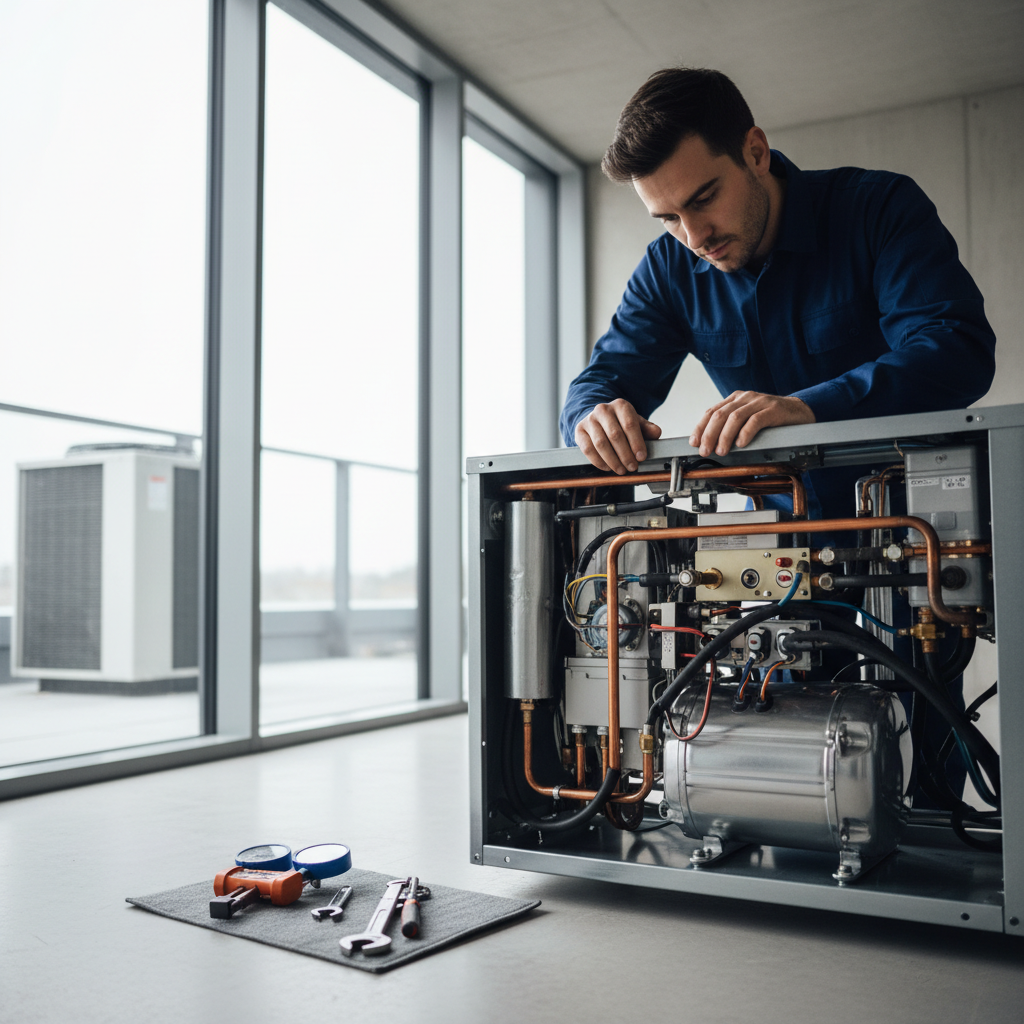
Is Your AC Leaking or Freezing Up? Jacksonville Homeowner's Guide
Published 2026-08-07 · HVAC Jacksonville · Jacksonville, FL
Water Leaking vs. Refrigerant Leak: How to Tell the Difference
Homeowners often call saying, "My AC is leaking Freon on the floor." In reality, refrigerant is a gas under high pressure. If your system has liquid pooling on your drywall, carpet, or attic floor, you are looking at condensate water. A refrigerant leak, by contrast, is invisible to the eye but produces severe system failure.
Here is how to distinguish between the two common leak types in Northeast Florida homes:
- Condensate Water Leak: You will see clear standing water in the emergency drain pan, water overflowing around the air handler closet, or yellow water stains spreading across your ceiling. In Jacksonville's climate, a 3-ton AC pulls between 5 and 20 gallons of water out of the air daily. When the 3/4-inch PVC drain line clogs with algae and mold, that water backs up immediately.
- Refrigerant (Freon) Leak: You will notice the system running nonstop while blowing lukewarm air, a faint sweet chemical smell or light hissing sound near the indoor coil, or an oily film collecting around copper brazed joints. Eventually, a refrigerant leak causes the indoor coil to freeze into a solid block of ice. If you suspect refrigerant loss, review our dedicated diagnostic protocol for AC repair in Jacksonville.
Why AC Units Freeze Up in Jacksonville Humidity
It seems counterintuitive: how can an air conditioner freeze into solid ice when it is 95°F outside in Duval County? The answer lies in the intense moisture load of our local atmosphere.
National Weather Service records show Jacksonville summer humidity routinely sits above 75%, pushing dew points into the mid-70s. As moist air passes over the evaporator coil, condensation forms across the aluminum fins. Under normal operating conditions, that coil stays around 45°F to 50°F, allowing water to drip safely into the drain pan.
However, if either of the following two problems occurs, the coil temperature plunges below 32°F:
- Severely Restricted Airflow: If your air filter is packed with dust, or return grilles are blocked, there isn't enough warm room air blowing across the coil to absorb heat. The refrigerant inside stays too cold, dropping the surface below freezing. The heavy Jacksonville humidity condenses and immediately flashes into frost. Within hours, that frost builds into an airtight wall of ice.
- Low Refrigerant Charge: When copper tubing develops microscopic pinhole leaks (common near coastal salt air in Jacksonville Beach and Ponte Vedra), the internal system pressure drops. According to thermodynamic laws, lower pressure equals a lower boiling point. The refrigerant expands at below-freezing temperatures, icing over the coil from the bottom up.
How to Check for AC Leaks in Jacksonville
If you suspect an active leak or notice frost forming on your system, follow these practical diagnostic steps before calling a technician:
| Diagnostic Step | What to Inspect | Normal Finding vs. Red Flag |
|---|---|---|
| 1. Air Filter Check | Inspect return grille or air handler filter slot | Red Flag: Matting, dark gray dust blocking light. Causes coil icing and short cycling. |
| 2. Drain Pan & Float Switch | Look inside the secondary drain pan under indoor unit | Red Flag: Standing water or float switch raised. Indicates blocked PVC drain line. |
| 3. Exterior Drain Exit | Locate 3/4" white PVC pipe outside near the condenser | Red Flag: Dry pipe while AC is running constantly in high humidity. Line is clogged. |
| 4. Copper Suction Line | Inspect larger insulated copper line entering outdoor unit | Red Flag: Solid ice crusting over the brass service valve. Indicates low refrigerant or zero airflow. |
| 5. Copper Joint Oily Residue | Check copper connections inside coil cabinet and outdoor unit | Red Flag: Oily grime on joints. Compressor oil escapes along with escaping refrigerant. |
AC Short Cycling in Jacksonville: Why It Accelerates Leaking & Freezing
Short cycling occurs when your air conditioner starts, runs for 3 to 8 minutes, and shuts down abruptly before cooling the house to the thermostat setting. In Northeast Florida, short cycling is devastating because dehumidification requires sustained run times of 15 to 25 minutes.
When an AC short cycles:
- Rapid Thermal Cycling: The coil rapidly freezes and partially thaws, creating massive amounts of condensation that overwhelm drain pans and splash against air handler insulation.
- Pressure Limit Tripping: Low refrigerant causes the system's low-pressure safety switch to cut power to the compressor, creating a relentless start-stop cycle.
- High Indoor Humidity: Because the system never runs long enough to wring moisture from the air, your home stays humid and clammy. For complete sizing solutions, read our guide on why oversizing causes short cycling.
What to Do Immediately If Your AC Is Freezing Up
Crucial Rule: Never leave your AC running in "COOL" mode when you see ice on the lines or coil! Running a frozen unit can destroy the compressor, turning a manageable repair into a multi-thousand-dollar replacement.
- Turn the thermostat COOL setting to OFF. This cuts power to the outdoor compressor immediately.
- Switch the FAN setting from AUTO to ON. This keeps the indoor blower running, circulating warm room air across the frozen coil to speed up thawing.
- Protect floors and ceilings. A frozen evaporator coil contains several pounds of ice. As it melts over 2 to 4 hours, water can overwhelm the drain pan. Place towels or a shallow container around the air handler base.
- Check the filter. If it is visibly dirty, discard and replace it with a fresh pleated filter.
- Call for professional diagnostic service. Once the unit has completely thawed, gauges and electronic leak detectors can determine whether low refrigerant or a mechanical restriction caused the freeze.
Need emergency leak detection or frozen coil repair? Our licensed Jacksonville technicians are available 24/7 with fully stocked service vans. Contact us now for same-day AC repair in Jacksonville by calling (904) 817-0647.
What the data actually shows for Jacksonville
Method: cross-reference of published NOAA, EPA, DOE and ASHRAE design conditions for Jacksonville, Duval County. Verified August 2026.
A thermodynamic reality unique to coastal Northeast Florida is the tight margin between operating coil temperature and outdoor dew point.
ASHRAE design data for Jacksonville indicates 1% summer cooling design temperatures of 94°F dry bulb and 77°F wet bulb. At an indoor ambient condition of 75°F and 60% relative humidity, the indoor dew point is approximately 60°F. An air conditioner operating at peak efficiency maintains an evaporator coil temperature between 45°F and 50°F—safely above the 32°F freezing threshold while well below the dew point to extract maximum moisture.
However, when airflow drops by just 25% (easily caused by an uncleaned 1-inch MERV 11 filter), or when refrigerant charge drops by 15%, the saturation suction temperature falls below 32°F. Because of Jacksonville’s immense moisture volume, ice builds twice as fast here as in dry regions like Arizona or Texas. What begins as a microscopic frost layer cascades into complete thermal insulation within 90 minutes of compressor run time.
Frequently asked questions
Why does my AC freeze up in Jacksonville summer humidity?
In Jacksonville, relative humidity regularly tops 75%, causing the evaporator coil to pull gallons of water out of the air daily. If airflow is blocked by a dirty air filter or closed return vents, or if refrigerant is low due to a pinhole coil leak, the coil temperature drops below 32°F. The heavy moisture instantly freezes into a solid block of ice.
How can I tell if my AC leak is water or refrigerant?
Water pooling around your air handler, overflowing from the drain pan, or dripping through ceilings is condensate water from a clogged PVC line. A refrigerant leak is an odorless or faint sweet-smelling pressurized gas. You cannot see pools of refrigerant, but you may see an oily film on copper joints or frost building up along the copper tubing.
What should I do immediately if my AC is covered in ice?
Turn your thermostat from COOL to OFF, and switch the fan setting from AUTO to ON. This circulates room-temperature air to gently melt the ice without burning out the compressor. Place towels or a bucket near your indoor air handler to catch melting runoff, and call for professional diagnostic service.
Why is my air conditioner short cycling every few minutes?
Short cycling occurs when an AC runs for only 3 to 8 minutes before abruptly shutting down. Common causes in Jacksonville include an oversized unit, a failing run capacitor, a severely clogged filter tripping high-pressure limits, or low refrigerant triggering the low-pressure safety switch.
How do technicians check for AC refrigerant leaks in Jacksonville?
Technicians use electronic halogen sniffers, ultrasonic acoustic detectors, and UV fluorescent dyes injected into the system. In coastal areas near Jacksonville Beach, salt corrosion often causes microscopic pinholes in evaporator coils that require electronic detection.